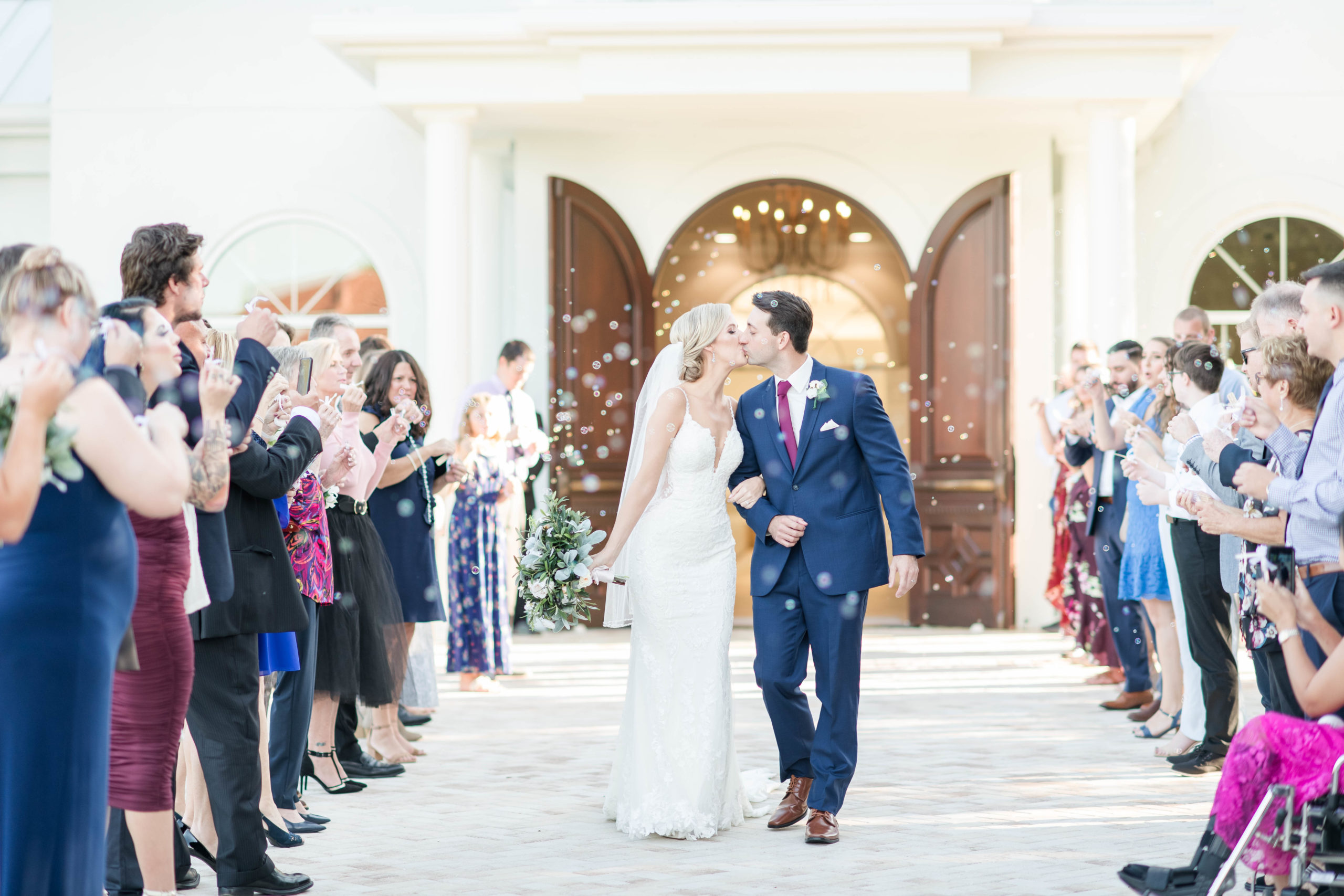

Choosing a wedding venue becomes easier when you decide what the space needs to accomplish. A wedding chapel is usually best for couples who want the ceremony to be the intentional center of the day, while a traditional wedding venue may be better for couples who want the ceremony, reception and other events organized around one broader property.
The Short Answer: Choose a wedding chapel when ceremony atmosphere, meaningful preparation and ceremony-specific support are your highest priorities. Choose a traditional wedding venue when an all-in-one celebration, reception space or highly adaptable event layout matters more. Neither option is automatically better or less expensive.
What Is the Difference Between a Wedding Chapel and a Traditional Wedding Venue?
A wedding chapel is a ceremony-focused venue designed primarily around the exchange of vows, while a traditional wedding venue is a broader event property—such as a hotel, ballroom, country club, barn, estate or event hall—that may accommodate the ceremony, reception or both.
These are general categories, not universal rules. Some chapels accommodate larger weddings and offer extensive ceremony support. Some traditional venues are highly structured, while others provide little more than an adaptable room. Couples should compare the individual properties rather than relying solely on the venue label.
How to Choose Between the Two
Use this seven-step process:
- Decide whether the ceremony or complete celebration should drive the venue choice.
- List your ceremony and reception needs separately.
- Establish a realistic guest-count range.
- Compare the total cost, not only the rental price.
- Review included support, customization and vendor policies.
- Map the preparation, ceremony, photography and reception timeline.
- Tour the strongest options and walk through the complete day.
Wedding Chapel vs. Traditional Wedding Venue Comparison
| Factor | Wedding chapel often offers | Traditional venue often offers | What to verify |
| Primary purpose | A dedicated ceremony setting | A broader event or reception setting | Which parts of the wedding can happen there? |
| Ceremony support | Ceremony-centered staff and established flow | Event coordination that may cover several parts of the day | Who plans and directs the ceremony? |
| Reception | May require a separate location | May offer ceremony and reception spaces | Is catering or reception service available? |
| Atmosphere | A setting that already feels ceremony-ready | Styles ranging from blank canvases to highly decorated properties | How much design work will be required? |
| Customization | May have ceremony or décor guidelines | May offer flexibility or require approved vendors | What is permitted, required or restricted? |
| Guest count | Varies by chapel | Varies by property and room | Will the space feel right at your expected attendance? |
| Timeline | May offer focused reservation windows | May offer a longer event-day rental | Are preparation, setup and portraits included in the reserved time? |
| Budget | May include ceremony-specific services | May bundle catering, rentals or reception services | What must be purchased separately? |
1. Decide Which Part of the Wedding Should Drive the Venue Choice
Begin with one question:
Do we want to build the wedding around the ceremony or around the complete celebration?
A chapel wedding places the vows and meaning of the ceremony at the center. The space is generally arranged around entrances, guest seating, the officiant, sound and the exchange of vows.
A traditional wedding venue may be a stronger fit when the couple wants a cocktail hour, dinner, dancing and other reception activities to happen on the same property.
This does not mean a chapel wedding cannot lead into a full reception. It means the couple may need to choose and coordinate a separate reception location.
2. Separate Your Ceremony and Reception Requirements
Couples often evaluate a venue as though the entire wedding were one event. It is more helpful to make three lists:
Ceremony
- Desired atmosphere
- Officiant
- Guest seating
- Sound
- Rehearsal
- Wedding-party preparation
- Ceremony customization
Reception
- Catering
- Tables and seating
- Entertainment
- Dancing
- Bar service
- Setup and cleanup
- Reception length
Transition
- Distance between locations
- Guest transportation
- Parking
- Photography time
- Time between ceremony and reception
- Directions for out-of-town guests
This framework reveals whether an all-in-one venue actually simplifies the wedding or whether a dedicated ceremony space and separate reception better support the couple’s priorities.
3. Compare Total Wedding Venue Cost
A lower venue fee does not necessarily produce a lower wedding cost.
When comparing a chapel with a traditional venue, identify:
- What is included in the reservation?
- Is a coordinator included?
- Must you arrange an officiant?
- Is rehearsal time included?
- Is sound support included?
- Are preparation rooms available?
- Is décor provided?
- Is catering required?
- Must approved vendors be used?
- Are setup, cleanup or overtime charged separately?
A chapel package may include ceremony services that would otherwise require several separate arrangements. A traditional venue may include reception-related services that a chapel does not provide.
The best comparison is:
Venue fee + required services + outside vendors + rentals + transportation = realistic total cost
4. Compare Support and Planning Responsibility
Venue convenience should be measured by the number of decisions left for the couple to manage.
Ask who will:
- Develop the ceremony order
- Direct the rehearsal
- Coordinate the wedding party
- Cue the processional
- Manage ceremony sound
- Communicate with the officiant
- Handle décor setup
- Guide the ceremony timeline
A flexible venue can be valuable when couples want complete control. However, that flexibility may also create more decisions and require a planner or additional vendors.
A ceremony-focused chapel can reduce those decisions when the necessary support is already included.
5. Consider Guest Count and Atmosphere
Capacity answers whether guests can fit. It does not answer how the wedding will feel.
A couple planning an intimate ceremony may want a venue where the guest list feels connected rather than lost in a large room. A larger wedding needs comfortable seating and an organized flow, but the couple may still want the focused atmosphere of a chapel.
Ask each venue:
- What is the maximum seated capacity?
- How does the room feel with our expected attendance?
- Will unused space make the ceremony feel empty?
- Can guests see and hear clearly?
- Are preparation areas appropriate for our wedding party?
Do not assume that every chapel is small. Capacity varies by property.
6. Review Customization and Venue Policies
Both chapels and traditional venues may have policies concerning:
- Décor
- Candles
- Music
- Officiants
- Vendors
- Photography
- Setup
- Cleanup
- Ceremony wording
- Reservation time
Ask for current policies before making a decision. Do not assume a chapel will be restrictive or that a traditional venue will allow complete freedom.
The more specific your ceremony vision is, the earlier these conversations should happen.
7. Map the Complete Wedding-Day Timeline
Reservation length matters because the venue may be needed before the first guest arrives.
Your timeline may need to include:
- Wedding-party arrival
- Getting ready
- Final décor
- Photographer arrival
- First look or portraits
- Guest seating
- Ceremony
- Family photographs
- Cleanup
- Travel to the reception
For a Tampa Bay wedding, also consider traffic and the distance between Safety Harbor, Clearwater, Dunedin, Palm Harbor, Oldsmar and the reception location.
If outdoor spaces are part of the plan, ask how weather affects the ceremony and what alternative is available. If photographs will take place off-site, confirm that the schedule includes sufficient travel time and verify the location’s photography rules.
Why This Wedding Venue Comparison Works
This approach works because it compares what the wedding needs rather than comparing venue labels.
A wedding chapel is not automatically small, inflexible or less expensive. A traditional wedding venue is not automatically all-inclusive, customizable or more convenient.
The right choice is the property that supports the couple’s priorities with the fewest unwanted compromises.
Common Wedding Venue Comparison Mistakes
Comparing only the base price
Calculate required vendors and services before deciding which option costs less.
Assuming every chapel is a church
A chapel may be faith-affiliated, nondenominational, independent or connected to another property. Ask about its beliefs and ceremony requirements.
Assuming every traditional venue includes the reception
Confirm exactly which spaces and services are included.
Choosing capacity without considering atmosphere
A room can hold the guest list and still feel too large, too confined or poorly arranged.
Ignoring the ceremony-to-reception transition
If the locations are separate, map the route and communicate the plan clearly to guests.
Choosing from photographs alone
A tour reveals preparation spaces, acoustics, sightlines, entrances and the actual flow of the day.
Which Wedding Venue Is Better for You?
A wedding chapel may be better if:
- The ceremony is the emotional and spiritual center of the day.
- You want a setting designed specifically for exchanging vows.
- You value ceremony planning, rehearsal or officiant support.
- You prefer a space with an established ceremony atmosphere.
- You are comfortable planning the reception separately when necessary.
A traditional wedding venue may be better if:
- You want the ceremony and reception on one property.
- Catering and reception logistics are your biggest priorities.
- You need several event spaces.
- You want to build the celebration around dinner, dancing and entertainment.
- The property’s particular layout and vendor options fit your vision.
A chapel with a separate reception may provide a middle path
Some couples choose a dedicated chapel for a meaningful ceremony and a separate restaurant, ballroom, hotel or event venue for the reception.
This can provide the ceremony atmosphere they want without giving up a larger reception. The tradeoff is that transportation and timing must be planned intentionally.
How Harborside Chapel Fits the Comparison
Harborside Chapel is a dedicated wedding ceremony venue in Safety Harbor, Florida. It seats up to 216 guests, allowing it to accommodate intimate, medium-sized and larger ceremonies.
Every reservation includes:
- Bridal Suite
- Groom’s Quarters
- In-house décor
- Dedicated wedding coordinator
- Sound technician
- Harborside pastor
- Marriage Mentoring Program
- One-hour rehearsal
Harborside offers 2.5-, 4- and 8-hour reservation options. Couples can compare current details on the wedding packages and pricing page.
Candles and additional décor are permitted, although restrictions apply. Couples should discuss specific plans with their coordinator.
Harborside Chapel does not provide catering or boutique wedding services. Couples planning a reception should therefore include the reception location and catering arrangements in their complete wedding plan.
The chapel’s Safety Harbor location is convenient to Clearwater, Dunedin, Palm Harbor, Oldsmar and the wider Tampa Bay area. Couples comparing the chapel itself can read A Beautiful White Wedding Chapel in Safety Harbor, FL: Harborside Chapel.
Frequently Asked Questions
Is a wedding chapel considered a wedding venue?
Yes. A wedding chapel is a type of wedding venue designed primarily around the ceremony. A traditional venue may accommodate the ceremony, reception or both.
Are wedding chapels only for small weddings?
No. Capacity varies. Harborside Chapel seats up to 216 guests, so it can accommodate intimate weddings as well as medium-sized and larger ceremony gatherings.
Is a chapel wedding less expensive than a traditional venue?
Not necessarily. Compare the venue fee, included services, required vendors and reception expenses. A chapel may include ceremony support, while a traditional venue may include catering or reception services.
Can a wedding chapel host the reception?
It depends on the chapel. Harborside Chapel is positioned as a wedding ceremony venue and does not provide catering. Couples should make separate reception and catering arrangements when needed.
Can we customize a chapel ceremony?
Customization policies vary. Harborside Chapel permits candles and additional décor, but restrictions apply. Couples should discuss their plans with the wedding coordinator.
How do we make the final decision?
Choose the venue that best supports your ceremony priorities, guest count, total budget, planning preferences and reception plan. Then tour the property and walk through the complete wedding-day timeline before reserving.
See the Difference in Person
Photographs can help you create a shortlist, but a tour shows how a venue will actually support your ceremony.
If a dedicated chapel sounds like the right fit, schedule a tour of Harborside Chapel to experience the space and discuss your wedding plans.


